
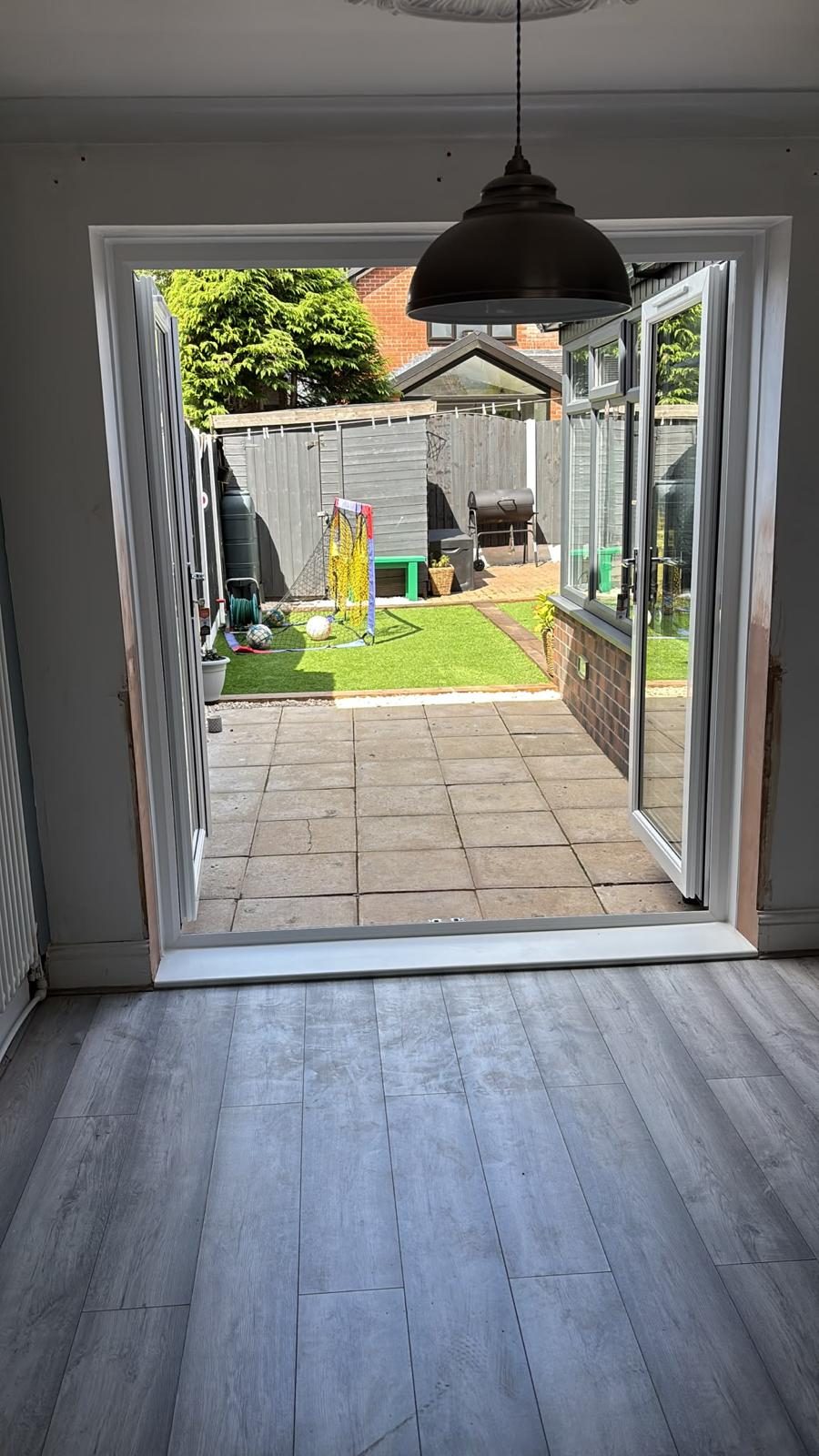
French doors are the traditional choice: two doors that open from the centre, typically on the back of the house. Bifold doors fold to one or both sides, opening up the entire wall. The right choice depends on how you use the space.
French doors are simpler, cheaper and more secure. Two leaves with a single lock point and shoot-bolts top and bottom. They open either inward or outward. If your kitchen or dining room is tight on space, inward-opening French doors take up room inside — that's where bifolds win.
Bifold doors stack to the side when fully open, creating a wide opening with no door leaf in the room. They're popular for kitchen extensions where the family moves between house and garden in summer. The downside is more ironmongery to maintain and a higher price — typically 30–50% more than French doors of the same size.
Threshold is the hidden issue. Bifold tracks sit in the floor and can create a trip hazard, especially for young children or anyone with mobility concerns. Low-track and flush-threshold options exist but add cost.
For security, French doors win on paper. Fewer panels means fewer weak points. But modern bifold systems use multi-point locking on every panel and hinge bolts to prevent lifting. A good bifold installed correctly is secure enough for any rear application.
Ready to talk about your project?
Free survey, honest quote, no obligation. Usually same working day callback.